Highlights & Projects
How SmartSim Supports Gas Networks Ireland on its Pathway to a Net Zero Carbon Network
The implementation of SmartSim for the transmission network at Gas Networks Ireland has now been successfully completed. At the same time, a new chapter is beginning – the application of gas quality tracking for downstream distribution networks. Building on the successful deployment and validation of the transmission model, Gas Networks Ireland is now progressing the application of SmartSim to support renewable gas integration as a pilot project for a localised distribution grid, where biomethane is being injected.
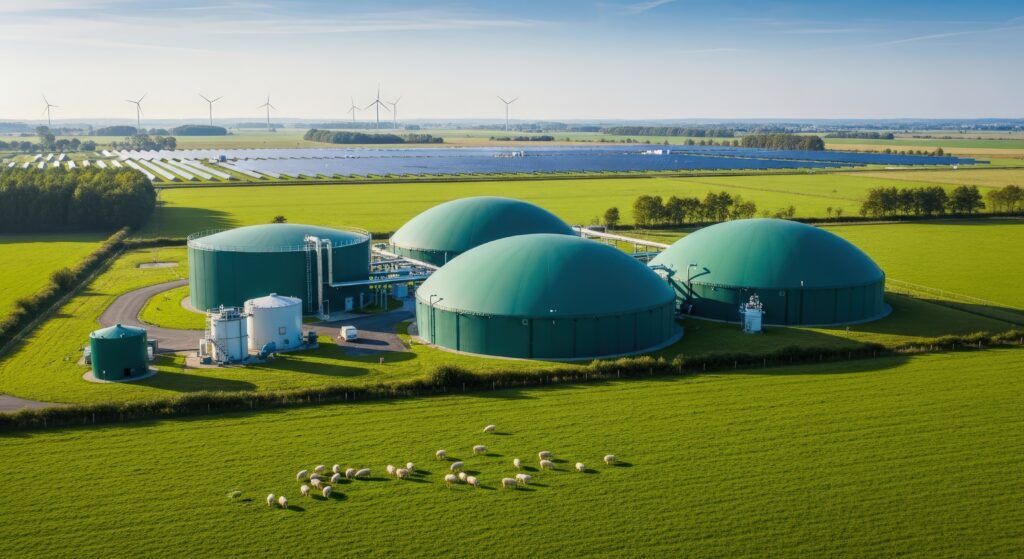
As part of its pathway to a net zero carbon gas network by 2045, Ireland has set a target of integrating 5.7 TWh of biomethane into the gas network by 2030. In future, biomethane will increasingly be injected locally into distribution networks and, over time, may require reverse compression into the transmission network. As a result, different blends of biomethane and natural gas will occur across the network.
This presents no issue for customers, as biomethane fully complies with Gas Networks Ireland’s gas quality specifications. However, biomethane has a lower calorific value (CV) and therefore a lower energy content than natural gas. As biomethane injection increases, understanding how gas quality varies across the network will become increasingly important.
The SmartSim gas quality tracking model provides Gas Networks Ireland with enhanced visibility of gas quality and energy content throughout the network. Determining CVs and the energy content of gas stored in the network — the linepack — enables a more precise allocation of energy quantities. Gas Networks Ireland provides this information to shippers and suppliers to support their daily balancing and procurement activities.
The deployment of SmartSim was prepared step by step. In a joint feasibility study, the suitability of the software for gas quality tracking in the transmission network was first demonstrated. SmartSim was then integrated into Gas Networks Ireland’s IT landscape and validated during the implementation phase. Comparisons with measurements from gas chromatographs at various points in the network confirmed the high accuracy of the calculated CVs.
The gas quality tracking model has now been successfully built and validated for the transmission grid, providing confidence in the accuracy of the calculated results and establishing a robust foundation for future developments in gas quality management. The validated SmartSim model provides a platform for enhanced CV determination as renewable gas volumes increase.
In parallel, Gas Networks Ireland is progressing the application of SmartSim within distribution networks, where increasing levels of biomethane injection will lead to greater variation in gas quality across the system. This local Distribution network supplies around 35,000 customers and is scheduled to go live with SmartSim later this year. This next phase will demonstrate how gas quality tracking can support the efficient integration of renewable gases while maintaining confidence in CV determination within an increasingly decentralised gas network.
Achieving Ireland’s climate targets will require the development of many new biomethane injection facilities across the country. Against this backdrop, Gas Networks Ireland is considering the future application of gas quality tracking across its wider distribution networks. As the number of injection points grows, gas quality tracking will become an increasingly important tool for CV determination, supporting the efficient integration of renewable gases into the Irish gas network.
SmartSim is therefore not only helping Gas Networks Ireland prepare for a future with increasing volumes of renewable gas, but is also providing a foundation for future innovation in gas quality tracking, calorific value determination and the operation of Ireland’s net zero carbon gas network.